Treatment guide
Night guards
Grinding or clenching your teeth during sleep, a habit dentists call bruxism, can wear down enamel, chip an edge or loosen a filling over months without you noticing at the time. A night guard is a custom-fitted appliance worn while you sleep, built to sit between your upper and lower teeth and absorb that pressure instead of your teeth taking it. It is made from an impression or a digital scan of your own bite, so it fits your mouth specifically rather than approximating it. Your dentist will look for the signs of grinding at your check-up and discuss whether a guard is worth considering.
Enquire about this treatment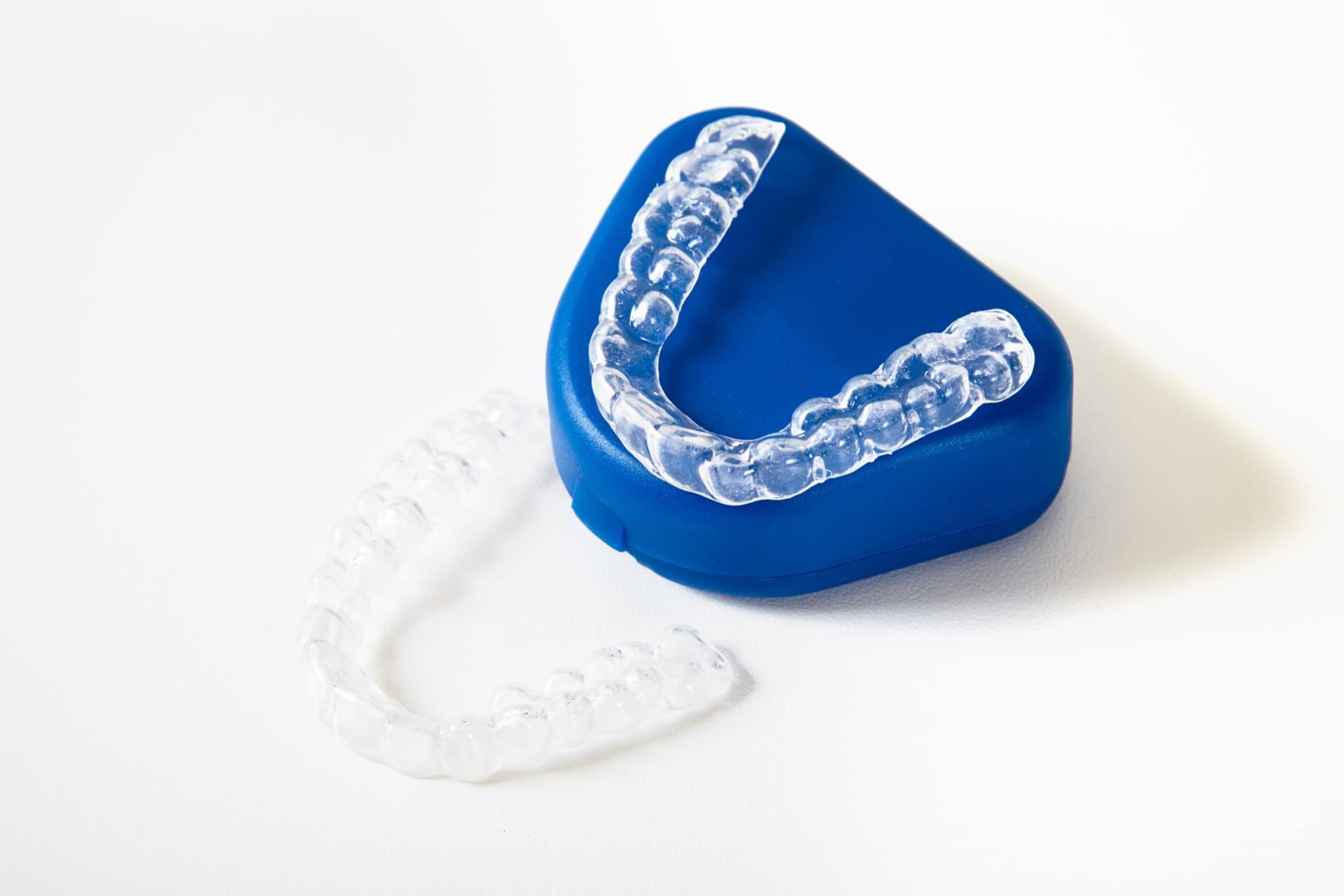
Why patients consider it
Concerns this treatment is designed to address.
Grinding or clenching your teeth during sleep, a habit dentists call bruxism, can wear down enamel, chip an edge or loosen a filling over months without you noticing at the time. A night guard is a custom-fitted appliance worn while you sleep, built to sit between your upper and lower teeth and absorb that pressure instead of your teeth taking it. It is made from an impression or a digital scan of your own bite, so it fits your mouth specifically rather than approximating it. Your dentist will look for the signs of grinding at your check-up and discuss whether a guard is worth considering.
- A cushion against grinding
The guard sits between your teeth and takes on the pressure of grinding or clenching, rather than your enamel absorbing the full force night after night. - Built from your own bite
An impression or a digital scan captures the exact shape of your teeth, so the guard is made to fit your mouth precisely and specifically. - Existing work given some protection
A crown, a veneer or an implant restoration can also come under pressure from grinding, and a guard helps take some of that load off them too.
What to expect
Every stage, explained clearly.
We look for the signs
Your dentist checks for worn edges, small chips or flattened surfaces on your teeth, and asks whether you wake with a sore jaw or headaches.
An impression or scan is taken
This captures your bite precisely and becomes the basis for a guard built specifically to your mouth.
We fit and check the guard
Once made, the guard is tried in and adjusted until it sits comfortably and your bite feels even across it.
Before your appointment
Useful things to know.
What is a night guard for?
A night guard is worn during sleep to protect your teeth from the wear caused by grinding or clenching, a habit called bruxism that many people are unaware they have.
Will a night guard help with snoring or sleep apnoea?
No. A night guard is not designed for snoring or sleep apnoea. If either is suspected, your dentist will advise you on an appropriate referral rather than treating it with a guard.
How do I know if I need one?
Signs include worn or chipped teeth, morning jaw ache, headaches, or a partner mentioning a grinding sound at night. Your dentist can assess whether a guard is appropriate.
Can a night guard protect a crown or implant?
Yes, to an extent. Grinding places pressure on existing dental work such as crowns, veneers or implants, and a guard can help reduce that load, though it is worth discussing your specific case with your dentist.
Plan your visit
Begin with a clear conversation.
Message the practice about what you have noticed, and the team will arrange a suitable assessment.
Enquire about this treatment